
Africa’s savannas host some of nature’s most intense encounters. When a tusked pig meets a spotted predator, the outcome is far from certain.
This matchup pits brute force against deadly precision. Readers will discover how size, weaponry, and fighting tactics determine survival when these two fierce animals clash.
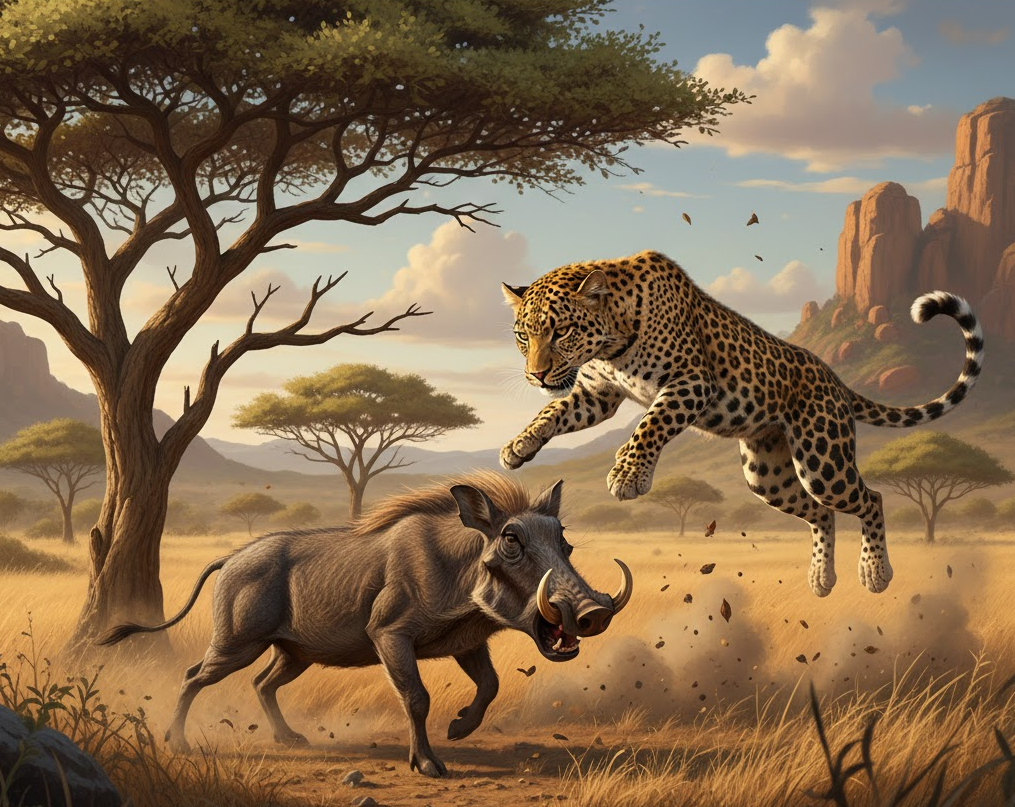
Contender 1: Warthog
The warthog stands as one of Africa’s toughest wild pigs, built like a small tank on stumpy legs. Adult males can reach 30 inches tall at the shoulder and stretch over five feet in length. Their bodies are covered in coarse, bristly hair that offers minimal protection but helps regulate temperature in the scorching heat.
What makes warthogs truly dangerous are their massive curved tusks. Males grow upper tusks that can exceed 25 inches in length, jutting upward like deadly daggers. The lower tusks are shorter but razor-sharp, designed for slashing and goring. These ivory weapons grow continuously throughout the animal’s life, staying perpetually sharp through constant use.
The warthog’s head functions as a battering ram reinforced with thick bone and cartilage. Warty protrusions protect the face during combat, absorbing impacts that would shatter the skull of less-adapted animals. Males develop especially prominent facial warts as they age, earning the species its distinctive name.
Speed surprises many observers when warthogs feel threatened. These stocky pigs can sprint at speeds reaching 30 miles per hour over short distances. Their preferred escape tactic involves running to underground burrows where they reverse inside, positioning their tusks toward the entrance to gore any predator foolish enough to follow.
Fun fact: Warthogs have developed specialized knee pads made of thick, calloused skin that allow them to kneel while feeding on short grasses. This unique adaptation means they spend much of their day literally on their knees, a position that would cripple other animals.
Contender 2: Leopard
The leopard represents pure predatory evolution, combining stealth, power, and intelligence into one lethal package. These big cats weigh between 80 to 200 pounds, with males significantly larger than females. Their muscular bodies stretch six to seven feet from nose to tail, built for explosive attacks rather than endurance pursuits.
Leopard jaws deliver crushing force through specially adapted skulls and jaw muscles. Bite force measurements show these cats can exert over 300 pounds per square inch of pressure. Their canine teeth extend up to two inches, designed to pierce through hide, muscle, and even bone to reach vital organs. Combined with powerful neck muscles, leopards can suffocate prey larger than themselves.
The spotted coat provides more than camouflage. Beneath the rosette-patterned fur lies a framework of dense muscle and bone capable of hauling carcasses three times the leopard’s weight straight up trees. This incredible strength-to-weight ratio makes leopards pound-for-pound one of the strongest cats alive. Their retractable claws measure over an inch long, curved like fish hooks for gripping and tearing flesh.
Agility sets leopards apart from other predators. They can leap over 20 feet horizontally and jump 10 feet vertically from a standstill. This explosive athleticism allows them to attack from unexpected angles, turning fights into ambushes before prey realizes danger approaches. Their flexible spines enable quick direction changes that leave slower animals stumbling.
Hunting strategy relies on patience and precision rather than brute force. Leopards stalk within striking distance before launching devastating attacks targeting the neck or throat. They prefer suffocation kills, clamping jaws around the windpipe until prey stops struggling. This method minimizes injury risk while ensuring quick deaths.
Fun fact: Leopards possess the widest dietary range of any big cat, documented eating over 100 different species. They’ve been observed hunting everything from beetles and fish to young elephants and crocodiles, adapting their techniques to whatever prey is available.
Head-to-Head
| Attribute | Warthog | Leopard |
|---|---|---|
| Size | 5 feet long, 30 inches tall | 6-7 feet long (with tail) |
| Weight | 120-250 pounds | 80-200 pounds |
| Speed | 30 mph | 36 mph |
| Bite Force | 450 PSI | 300 PSI |
| Key Strength | Powerful tusks and thick skull | Agility and killing expertise |
| Main Weakness | Limited agility and reach | Vulnerable to tusk injuries |
| Offense Tools | 25-inch tusks, ramming head | Claws, canines, suffocating bite |
| Defense Tools | Thick hide, facial warts, speed | Speed, climbing ability, stealth |
| Combat Strategy | Charge and slash upward | Ambush neck and suffocate |
Warthog vs. Leopard: The Showdown
The confrontation begins at a waterhole during late afternoon. The warthog drinks cautiously, aware that danger lurks in the surrounding bush. A mature male leopard watches from 40 feet away, hidden behind tall grass. He’s been tracking this particular pig for an hour, waiting for the perfect moment.
The leopard creeps closer, belly low to the ground. Each paw placement is calculated to avoid snapping twigs or rustling dry leaves. At 15 feet, the cat bunches his muscles, ready to explode forward. The warthog’s head suddenly jerks up, nostrils flaring as wind carries the predator’s scent.
The pig doesn’t wait to confirm the threat. He spins and charges directly at the source of danger, squealing loudly. This aggressive response catches the leopard off-guard. Most prey animals flee, but warthogs often attack when cornered or defending territory.
The leopard launches his assault a split second too late. His initial pounce aims for the warthog’s neck, but the pig lowers his head and drives upward with those massive tusks. One tusk slices across the cat’s shoulder, drawing blood and forcing him to abort the attack. Both animals circle each other, reassessing.
The leopard tries a different approach, darting to the warthog’s flank. His claws rake across the pig’s tough hide, leaving shallow cuts. The warthog pivots quickly despite his bulk, always keeping his tusks pointed toward the threat. He charges again, head down, using short powerful bursts of speed.
This second charge connects partially. The warthog’s skull slams into the leopard’s ribs with bone-jarring force. The cat yowls and leaps sideways, favoring his left side where the impact landed. Pain and surprise register in his movements. This prey fights back harder than antelope or impala.
The leopard adjusts tactics once more, using his superior agility. He feints left, then springs right, landing on the warthog’s back. His claws dig deep into flesh, seeking purchase on the bristly hide. The pig bucks violently, squealing and spinning in tight circles to dislodge the attacker.
Sharp tusks swing in wild arcs during this frantic dance. The leopard barely avoids being gutted twice, his reflexes saving him from serious injury. He releases his grip and bounds away, breathing heavily. Blood drips from both the shoulder wound and several deep scratches.
The warthog stands his ground, head lowered, tusks gleaming red in the setting sun. He’s bleeding from multiple claw wounds but shows no signs of backing down. His defensive posture communicates clear intent: continue this fight at your own risk.
The leopard weighs his options carefully. Hunger battles against survival instinct. He’s injured, the pig is still dangerous, and easier prey exists elsewhere. Smart predators know when to quit. With a final hiss, the leopard retreats into the bush, leaving the warthog victorious.
This particular encounter ends with the warthog winning through sheer determination and weaponry. The leopard’s injuries, while not fatal, will affect his hunting ability for days. The warthog’s wounds will heal quickly beneath his tough hide. Survival percentages favor the warthog at roughly 60-40 in confrontations where both animals are healthy adults and the pig detects the ambush early.
Warthog vs. Leopard: Who Would Win?
The warthog claims victory in most direct confrontations thanks to superior defensive weapons and the willingness to fight rather than flee. Those massive tusks combined with aggressive charging behavior give the pig enough advantages to overcome the leopard’s superior agility and hunting skills.
Points to note:
- Leopards typically avoid healthy adult warthogs, preferring easier prey that poses less injury risk
- Successful leopard kills usually involve young, sick, or injured warthogs caught completely by surprise
- The outcome shifts dramatically if the leopard achieves a perfect ambush and latches onto the neck before the warthog can react
- Terrain plays a crucial role since warthogs near burrows can retreat to safety, while open ground favors leopard mobility
- Female warthogs defending piglets become even more aggressive and dangerous to attacking predators
- Injuries that would be minor for the warthog, such as deep claw wounds, can become infected and prove fatal to leopards who need peak physical condition for hunting
- Warthog tusks continue growing throughout their lives, meaning older males possess increasingly deadly weapons that even large predators respect