
The silverback gorilla and the lion represent two of nature’s most powerful forces. Each animal commands respect in its territory, possessing unique weapons that have evolved over millions of years. Both are apex creatures built for dominance.
This matchup pits raw primate strength against feline hunting prowess. The question has sparked endless debate among wildlife enthusiasts across the globe.
In this analysis, you’ll discover the physical capabilities of each animal, their combat advantages, and how a real encounter between these titans would likely unfold.
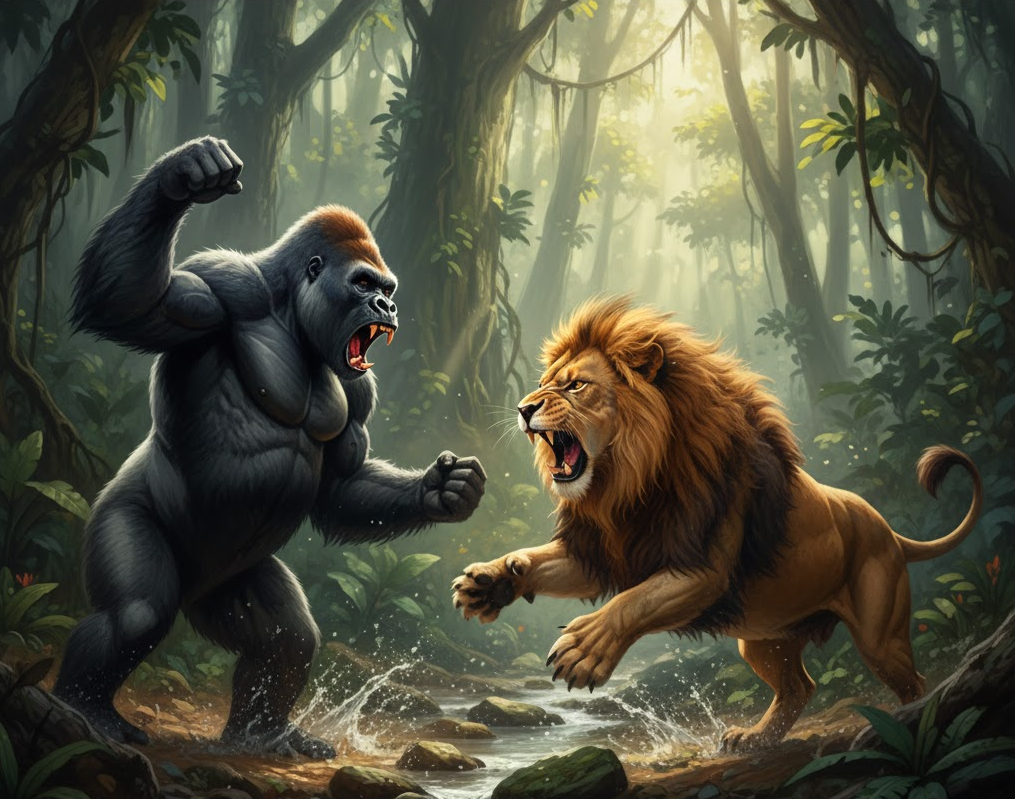
Contender 1: Silverback Gorilla
The silverback gorilla stands as one of the most powerful primates on Earth. Adult males reach heights of 5.5 to 6 feet when standing upright. Their bodies are covered in thick black fur, with the distinctive silver saddle across their backs that gives them their name.
These massive apes can weigh between 300 and 485 pounds in the wild. Their muscular build concentrates tremendous strength in their arms, chest, and shoulders. A silverback’s arm span stretches up to 8 feet wide, allowing impressive reach during confrontations.
The gorilla’s bite force measures around 1,300 PSI (pounds per square inch). Their canine teeth grow up to 2 inches long and can inflict serious damage. The jaw muscles are incredibly strong, capable of crushing bamboo and tough vegetation with ease.
Beyond their bite, silverbacks possess extraordinary arm strength. Estimates suggest they are 4 to 9 times stronger than an average human. Those powerful arms can lift over 1,800 pounds and deliver devastating blows. Their hands work as versatile tools for grabbing, striking, and controlling opponents.
Fun fact: Silverbacks have been observed bending thick bamboo stalks and even metal bars in captivity, demonstrating grip strength that far exceeds what their size might suggest.
Contender 2: Lion
The African lion has earned its reputation as the king of beasts through generations of successful hunts. Male lions measure 8 to 10 feet long from nose to tail. They stand about 4 feet tall at the shoulder. Their golden coats and massive manes create an intimidating appearance that serves both aesthetic and protective purposes.
Adult male lions weigh between 330 and 550 pounds in the wild. Their bodies are built for explosive power rather than endurance. Every muscle group works together to create the perfect ambush predator. The thick mane around their neck provides crucial protection during fights with rivals.
A lion’s bite force reaches approximately 650 PSI. While lower than the gorilla’s bite force, their teeth tell a different story. Canines extend up to 3 inches long and are designed specifically for killing. These teeth pierce through hide and flesh to reach vital organs and blood vessels.
The real weapons of a lion are its claws. Each paw contains five retractable claws that can extend up to 1.5 inches. These razor-sharp tools act like meat hooks, latching onto prey and tearing through muscle tissue. Lions use their claws to grip, slash, and maintain control during combat.
Speed gives lions a significant tactical advantage. They can sprint at speeds up to 50 mph in short bursts. This explosive acceleration allows them to close distance rapidly and strike before opponents can react. Their agility lets them dodge, circle, and reposition during fights.
Lions have evolved as cooperative hunters and fighters. While male lions often fight solo when defending territory, they possess instincts honed through countless battles with rival males, hyenas, and buffalo. Their combat experience runs deep in their DNA.
Fun fact: A lion’s roar can be heard from up to 5 miles away and serves as both a territorial warning and a psychological weapon that can literally paralyze prey with fear.
Head-to-Head
| Category | Silverback Gorilla | Lion |
|---|---|---|
| Size | 5.5-6 feet tall (standing) | 8-10 feet long |
| Weight | 300-485 pounds | 330-550 pounds |
| Speed | 20-25 mph | 50 mph |
| Bite Force | 1,300 PSI | 650 PSI |
| Key Strength | Arm power and grip strength | Speed and weaponry |
| Main Weakness | Lack of natural weapons | Less raw strength |
| Offense Tools | Powerful arms, canines, brute force | Claws, canines, speed |
| Defense Tools | Thick muscles, dodging ability | Mane, agility |
| Combat Strategy | Intimidation, grappling, striking | Ambush, slash and bite |
Silverback Gorilla vs. Lion: The Showdown
The encounter begins at a watering hole where territorial lines blur. The silverback arrives first, moving through the brush with deliberate steps. His massive frame casts a shadow across the dusty ground. The lion approaches from downwind, instinctively using stealth despite his size.
Both animals lock eyes. The silverback immediately rises to his full height and begins chest beating. The thunderous sound echoes across the clearing. He bares his teeth and releases a powerful roar meant to establish dominance. The lion responds with a deep growl that rumbles from his chest.
Neither animal backs down. The tension breaks when the lion begins circling to the left. His movements are calculated and patient. The silverback pivots to keep the lion in front of him, using his arms to maintain balance. His eyes track every step.
The lion makes the first move. He charges at 35 mph, closing the 20-foot gap in seconds. The silverback stands his ground and swings his massive arm. The blow connects with the lion’s shoulder, sending him tumbling sideways. The impact would have broken human bones.
But the lion recovers with feline grace. He circles again, staying just out of arm’s reach. The gorilla tries to grab him but misses. The lion sees an opening and lunges forward. His claws extend and rake across the silverback’s arm, drawing blood. The gorilla bellows in pain and rage.
The silverback charges forward with surprising speed. He manages to grab the lion’s mane with one powerful hand. For a moment, he has control. The gorilla pulls the lion toward him and attempts to bite the neck. The thick mane provides protection, and the lion twists violently.
The lion’s back claws come into play. They tear at the gorilla’s torso while his front claws slash at the arms. Multiple wounds open across the silverback’s body. The pain forces him to release his grip. The lion breaks free and immediately creates distance.
Blood now covers both animals. The silverback has multiple lacerations but remains standing. The lion limps slightly from the earlier blow. His shoulder aches but his weapons remain sharp. Both animals are breathing heavily.
The lion attacks again, this time from a different angle. He feints left then strikes right. His claws catch the gorilla’s face, narrowly missing an eye. The silverback swings wildly but connects only with air. The lion’s speed advantage becomes increasingly obvious.
The gorilla attempts to charge and corner the lion against nearby rocks. The strategy fails. The lion simply leaps to the side and slashes the gorilla’s back as he passes. More blood flows. The silverback turns but his movements grow slower. The accumulated damage takes its toll.
The lion recognizes the weakening opponent. He makes a calculated rush straight at the gorilla. His jaws clamp onto the gorilla’s thick neck. The silverback thrashes and manages to throw the lion off. But deep puncture wounds now compromise his defenses.
The silverback makes one final desperate attempt. He grabs a fallen branch and swings it like a club. The lion dodges easily. Exhaustion and blood loss make the gorilla’s movements predictable. His arms drop lower with each passing second.
The lion circles behind the struggling gorilla. With lightning speed, he leaps onto the silverback’s back. All four sets of claws dig in deep. The gorilla cannot reach behind to remove the attacker. The lion bites repeatedly at the neck and shoulders.
The silverback falls to his knees. His strength finally gives out. The lion maintains his position and delivers a killing bite to the base of the skull. The fight ends after roughly eight minutes of brutal combat.
The lion emerges victorious but seriously injured. His chances of winning stand at approximately 65 to 70 percent in most scenarios. The combination of speed, weaponry, and fighting instinct proves decisive.
Silverback Gorilla vs. Lion: Who Would Win?
The lion would most likely win this battle due to superior weaponry and combat instincts. While the silverback possesses greater raw strength, the lion’s claws and refined killing techniques give him the decisive edge in a fight to the death.
Points to note:
- The fight could swing in the gorilla’s favor if he manages to grab and control the lion early in the encounter, using his superior grip strength to prevent the lion from deploying his claws effectively
- These two animals would never naturally encounter each other, as lions inhabit African savannas while mountain gorillas live in forests at higher elevations, and lowland gorillas occupy different forest regions
- A younger, smaller male lion would face worse odds against a prime silverback, as the weight and strength differential would narrow considerably
- The terrain heavily influences the outcome, with dense forest areas favoring the gorilla’s ability to use trees and obstacles, while open ground maximizes the lion’s speed advantage
- If the silverback avoids serious injury in the first minute and manages to land multiple devastating blows to the lion’s head or legs, the fight’s momentum could shift dramatically
- Female gorillas and young offspring would motivate a silverback to fight with increased desperation and aggression, potentially changing his tactics from defensive to offensive
- A well-fed lion in his prime (ages 5 to 9 years) represents the most dangerous opponent, while older or injured lions would struggle more against the gorilla’s power
- The lack of natural weapons beyond teeth puts the gorilla at a severe disadvantage, as evolution designed his strength for displays and intimidation rather than lethal combat