
The ocean’s apex predator faces off against one of its nimble prey in a battle of raw power versus desperate survival. Orcas dominate marine ecosystems with their massive size and intelligence, while sea lions rely on speed and agility to escape danger.
This article examines the physical capabilities of both animals, their natural weapons, and how a real encounter would unfold. Readers will discover which creature holds the advantage and why the outcome is more predictable than they might expect.
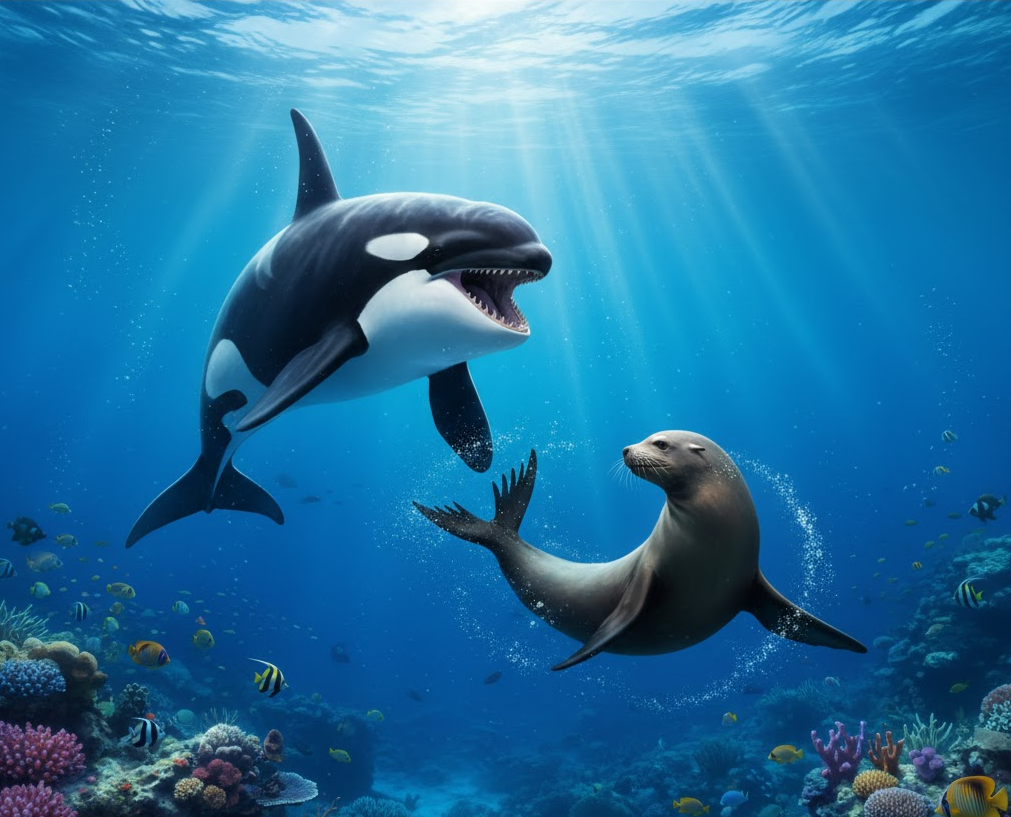
Contender 1: Orca
The orca stands as the ocean’s largest dolphin species, reaching lengths of 23 to 32 feet and weighing between 8,000 to 12,000 pounds. Males grow significantly larger than females, with their distinctive black and white coloring making them instantly recognizable. These marine mammals possess a streamlined body built for speed and power.
Their most formidable weapon sits inside a jaw lined with 40 to 56 interlocking teeth. Each tooth measures up to 4 inches long and curves backward to grip slippery prey. The bite force reaches an estimated 19,000 pounds per square inch, strong enough to crush bone and tear through thick blubber.
Beyond their teeth, orcas use their massive tail flukes as devastating weapons. A single tail slap can stun or kill prey instantly. Their bodies contain several tons of pure muscle that generates incredible force during attacks.
Speed adds another dimension to their hunting prowess. Orcas can swim up to 35 miles per hour in short bursts, though they typically cruise at 5 to 8 miles per hour. This combination of size and velocity creates momentum that few marine animals can withstand.
Their thick blubber layer provides excellent defense against cold water and minor injuries. The skin itself is tough and difficult to penetrate. However, their intelligence serves as their greatest defensive tool, allowing them to assess threats and coordinate group strategies.
Fun fact: Orcas have distinct hunting cultures passed down through generations, with some pods specializing in hunting specific prey using unique techniques that other orca populations never use.
Contender 2: Sea Lion
Sea lions belong to a group called eared seals, distinguishing them from true seals by their external ear flaps and ability to walk on land using their flippers. California sea lions, one of the most common species, measure 6 to 8 feet long and weigh between 400 to 850 pounds. Males develop thick necks and a prominent forehead crest as they mature.
Their bodies are built for aquatic agility rather than power. Powerful front flippers propel them through water at speeds reaching 25 miles per hour. They can dive to depths of 900 feet and hold their breath for up to 10 minutes while searching for fish and squid.
The sea lion’s offensive capabilities pale compared to larger predators. Their jaws contain sharp canine teeth used primarily for gripping fish. Bite force measures roughly 500 pounds per square inch. While adequate for catching slippery prey, these teeth serve more as tools than weapons against serious threats.
Flexibility gives sea lions their main advantage in confrontations. They can twist, turn, and change direction almost instantly in water. This maneuverability allows them to dodge attacks from slower predators. On land, they move surprisingly fast for short distances despite their awkward gait.
Their defense relies almost entirely on speed and awareness. Sea lions have excellent vision both above and below water, letting them spot danger from far away. When threatened, they seek safety in numbers by joining other sea lions or fleeing to shore.
The skin and blubber layer provide minimal protection against serious attacks. Sea lions lack the thick hide or armor found in many marine mammals. Their ribs and internal organs sit relatively close to the surface, making them vulnerable to crushing injuries.
Fun fact: Sea lions can recognize individual voices and calls even in noisy colonies containing thousands of animals, allowing mothers to find their specific pups among the chaos.
Head-to-Head
| Attribute | Orca | Sea Lion |
|---|---|---|
| Size | 23-32 feet | 6-8 feet |
| Weight | 8,000-12,000 lbs | 400-850 lbs |
| Speed | 35 mph (burst) | 25 mph |
| Bite Force | 19,000 PSI | 500 PSI |
| Key Strength | Massive size and intelligence | Speed and agility |
| Main Weakness | None in marine environment | Fragile body structure |
| Offense Tools | Powerful jaws, tail strikes, ramming | Sharp teeth, quick bites |
| Defense Tools | Thick blubber, tough skin | Maneuverability, escape speed |
| Combat Strategy | Direct assault with overwhelming force | Evasion and escape |
Orca vs. Sea Lion: The Showdown
The sea lion swims through kelp forests off the California coast, searching for its next meal. Below, an orca glides silently through deeper water, tracking the smaller animal’s movements. The predator rises slowly, staying hidden in the murky depths.
The sea lion senses something wrong. It stops feeding and scans the water nervously. That moment of hesitation costs it precious seconds. The orca explodes upward at full speed, closing the 50-foot gap in less than three seconds.
The sea lion spots the black dorsal fin cutting through the water. Panic takes over. It pumps its flippers frantically, reaching maximum speed almost instantly. The gap between them shrinks despite the sea lion’s desperate sprint.
The orca’s superior burst speed proves decisive. Within seconds, the massive predator draws alongside its prey. The sea lion tries a sharp turn, using its flexibility to cut away at a right angle. The orca anticipated this move and adjusts course with surprising agility for such a large animal.
The orca strikes with its massive head, hitting the sea lion’s midsection. The impact alone stuns the smaller animal, disrupting its swimming rhythm. Before the sea lion recovers, powerful jaws clamp down on its body. Those 4-inch teeth pierce through skin and blubber.
The sea lion thrashes wildly, trying to escape the crushing grip. Its own teeth snap at the orca’s face, managing to leave small scratches. These minor wounds mean nothing to the thick-skinned predator. The orca shakes its head violently, the way a dog might shake a toy.
Bones crack under the immense pressure. The sea lion’s ribs collapse inward, causing catastrophic internal damage. The orca releases its grip momentarily, then strikes again with its tail. The blow sends the sea lion tumbling through the water, disoriented and severely injured.
The fight enters its final stage. The sea lion can barely swim, its movements weak and uncoordinated. The orca approaches calmly, knowing the outcome is certain. One more bite to the neck ends the struggle. From first strike to final moment, the entire encounter lasts less than 30 seconds.
The orca wins this fight 95% of the time. The size and power difference makes any other outcome extremely unlikely. Only exceptional circumstances like shallow water, nearby rocks for the sea lion to escape onto, or an injured orca could change this result.
Orca vs. Sea Lion: Who Would Win?
The orca wins decisively due to its overwhelming size advantage and superior weapons. A sea lion simply lacks the tools needed to inflict serious damage on such a large, well-protected predator.
Points to note:
- This matchup happens regularly in nature, as orcas actively hunt sea lions as part of their natural diet
- Sea lions evolved their speed and agility specifically to escape orca attacks, yet many still fall victim to these predators
- Orcas sometimes play with sea lions before killing them, tossing them into the air with their tails as a form of practice for younger pod members
- The only realistic scenario where a sea lion could survive involves reaching shore before the orca catches it, as orcas cannot pursue prey onto beaches
- Multiple sea lions together have no better chance against an orca than a single individual, as the predator will simply target one at a time
- Weather conditions, water clarity, and location make little difference to the outcome since orcas hunt successfully in all marine environments
- Young or sick orcas might struggle more with catching sea lions, but healthy adults rarely miss their targets
- Some orca pods prefer other prey and never hunt sea lions, showing that dietary preference rather than inability drives their hunting choices