
The ocean holds countless mysteries, but few questions spark as much debate as what would happen if an orca faced off against a dolphin. These two intelligent marine mammals share similar features, yet they differ greatly in size and hunting ability.
This article breaks down the physical traits, strengths, and weaknesses of both creatures. Readers will learn exactly how each animal would perform in a direct fight and which one stands the best chance of winning.
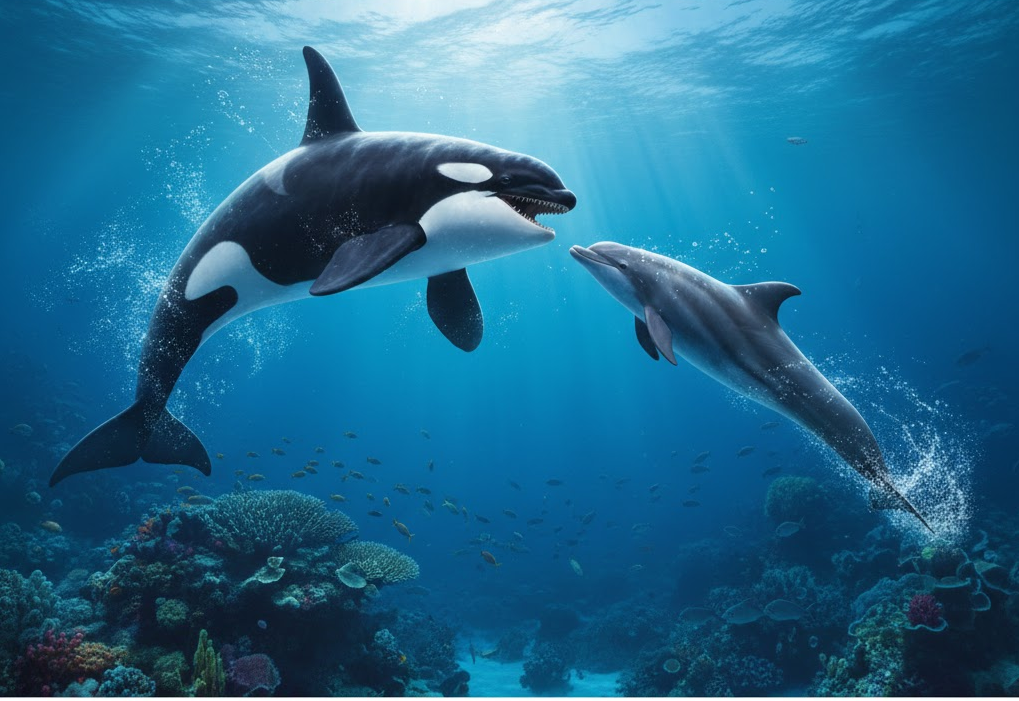
Contender 1: Orca
The orca, often called the killer whale, stands as one of the ocean’s most powerful predators. These massive marine mammals can reach lengths of 20 to 26 feet for females and up to 32 feet for males. Their black and white coloring makes them easy to spot, but their true power lies beneath the surface.
An orca’s mouth contains 40 to 56 large, cone-shaped teeth. Each tooth measures up to 4 inches long and can crush bones with ease. These teeth work together to grip and tear prey apart with brutal efficiency. The bite force of an orca reaches approximately 19,000 pounds per square inch, making it one of the strongest bites in the animal kingdom.
Beyond their teeth, orcas possess incredible speed and agility for their size. They can swim up to 34 miles per hour in short bursts. Their streamlined bodies cut through water like missiles. The powerful tail flukes provide thrust while the dorsal fin, which can reach 6 feet tall in males, helps with balance and direction.
Orcas hunt in coordinated groups called pods. They use echolocation to find prey and communicate with each other through clicks and calls. This team hunting strategy makes them even more dangerous. They can take down animals much larger than themselves, including great white sharks and blue whales.
Fun fact: Orcas have been observed playing with their food, tossing seals high into the air before eating them. Scientists believe this behavior might serve as hunting practice for young orcas or simply as a form of entertainment for these highly intelligent creatures.
Contender 2: Dolphin
Dolphins are smaller members of the cetacean family, typically measuring between 6 to 12 feet in length. The most common species, the bottlenose dolphin, averages around 8 feet long. Their sleek, gray bodies are built for speed and quick movements through the water. Despite their friendly reputation, dolphins are skilled hunters with impressive physical abilities.
A dolphin’s jaw contains 80 to 100 small, sharp teeth. These teeth are designed to grip slippery fish rather than tear flesh like an orca’s teeth. Each tooth measures about half an inch long. While their bite force reaches only about 200 to 300 pounds per square inch, they use their teeth effectively to catch and hold prey.
Speed serves as one of the dolphin’s greatest assets. These marine mammals can reach speeds of 20 to 25 miles per hour. Some species can even hit bursts of 30 miles per hour when escaping danger. Their flexible bodies allow them to make sharp turns and sudden directional changes that larger predators cannot match.
Dolphins also use echolocation to navigate and hunt. They produce clicking sounds that bounce off objects, creating a mental map of their surroundings. This biological sonar works so well that dolphins can locate a fish the size of a golf ball from over 200 feet away. Their intelligence rivals that of great apes, making them strategic thinkers in survival situations.
When threatened, dolphins often travel in groups called pods. They use their speed to escape and sometimes fight back by ramming attackers with their snouts. The rostrum, or beak, can deliver powerful blows when driven at high speed. Some dolphins have been seen working together to fend off predators, including sharks.
Dolphins possess excellent maneuverability that helps them avoid danger. Their pectoral fins act like steering wheels, allowing precise control. The tail flukes provide powerful propulsion with each stroke. This combination of speed and agility makes dolphins difficult targets for slower predators.
Fun fact: Dolphins can hold their breath for up to 15 minutes, though they usually surface every 5 to 8 minutes. During deep dives, they can slow their heart rate to conserve oxygen, dropping from 110 beats per minute to as low as 30 beats per minute.
Head-to-Head
| Attribute | Orca | Dolphin |
|---|---|---|
| Size | 20-32 feet | 6-12 feet |
| Weight | 8,000-12,000 pounds | 300-600 pounds |
| Speed | 34 mph (burst) | 20-30 mph |
| Bite Force | 19,000 PSI | 200-300 PSI |
| Key Strength | Massive size and power | Superior agility and speed |
| Main Weakness | Less maneuverable | Much smaller and weaker |
| Offense Tools | Large teeth, ramming, tail strikes | Small teeth, ramming with rostrum |
| Defense Tools | Thick blubber layer, intimidating size | Quick escape, evasive maneuvers |
| Combat Strategy | Overwhelming force, coordinated attacks | Hit-and-run tactics, escape when possible |
Orca vs. Dolphin: The Showdown
The waters off the coast grow turbulent as an orca pod patrols its territory. A lone bottlenose dolphin enters the area, searching for fish. One large male orca, measuring 28 feet long and weighing nearly 10,000 pounds, spots the intruder. The dolphin notices the threat immediately and changes course.
The orca accelerates, closing the distance with powerful strokes of its tail. Water explodes around the massive predator as it reaches speeds of 30 miles per hour. The dolphin responds by darting to the left, using its superior turning ability to create space. For a moment, the smaller animal gains ground, swimming at 25 miles per hour while making sharp zigzag patterns.
The orca adjusts its approach, predicting the dolphin’s movements. Years of hunting experience guide the killer whale’s tactics. It drives upward from below, cutting off one escape route. The dolphin sees the danger and dives deeper, trying to use the ocean floor for cover.
But the orca matches the dive, staying close behind. The distance shrinks to less than 20 feet. The dolphin makes a desperate move, spinning around and attempting to ram the orca’s side with its rostrum. The blow connects with the orca’s thick blubber but barely registers. It’s like hitting a rubber wall with a stick.
The orca retaliates instantly. Its massive jaws open wide, revealing rows of 4-inch teeth. The killer whale lunges forward with explosive power. The dolphin tries one final evasive maneuver, but the orca’s teeth clamp down on its tail section. The bite force of 19,000 PSI crushes through muscle and bone.
The dolphin thrashes wildly, trying to break free. Its small teeth snap at the orca’s face but cannot penetrate the thick skin and blubber. The orca shakes its head violently, the way a dog might shake a toy. The dolphin’s body whips back and forth in the water. Blood begins to cloud the surrounding area.
Within seconds, the orca releases and strikes again, this time aiming for the dolphin’s midsection. The second bite proves fatal. The massive predator’s teeth puncture vital organs. The dolphin’s movements slow, then stop. The entire encounter lasts less than two minutes from start to finish.
The orca wins this fight with overwhelming superiority. The size difference alone makes victory nearly certain. A 10,000-pound predator against a 400-pound prey animal results in a mismatch of epic proportions. The orca’s chances of winning this encounter stand at roughly 95 percent, with the remaining 5 percent accounting only for the unlikely scenario where the dolphin manages a perfect escape before the fight truly begins.
Orca vs. Dolphin: Who Would Win?
The orca would almost certainly win this fight due to its massive size advantage and far superior bite force. The dolphin’s speed and agility provide some defensive capability, but these traits cannot overcome a weight difference of more than 9,000 pounds and teeth that can crush bone.
Points to note:
- This fight would rarely happen in nature since orcas do occasionally eat dolphins, but many orca pods specialize in specific prey and might ignore dolphins entirely
- A pod of dolphins working together might successfully escape an orca through coordinated evasive maneuvers, though fighting back would still prove futile
- Young or injured orcas could potentially be vulnerable, but even a juvenile orca would likely outweigh an adult dolphin by several thousand pounds
- The dolphin’s only realistic chance involves escaping before direct contact occurs, as no amount of ramming or biting could seriously harm an adult orca
- Environmental factors like shallow water or rocky areas might give the dolphin better escape options by using its superior maneuverability
- Orcas have been documented hunting and eating dolphins in the wild, confirming that this encounter does occur naturally, though not frequently
- The outcome assumes a one-on-one encounter; in reality, both species typically travel in groups, which would change the scenario significantly