
Picture a deadly snake armed with lethal venom facing off against the king of beasts. This matchup brings together two of nature’s most feared predators from completely different corners of the animal kingdom.
This article breaks down the physical traits, weapons, and fighting abilities of both animals. By examining their strengths and weaknesses, a clear winner emerges from this epic battle.
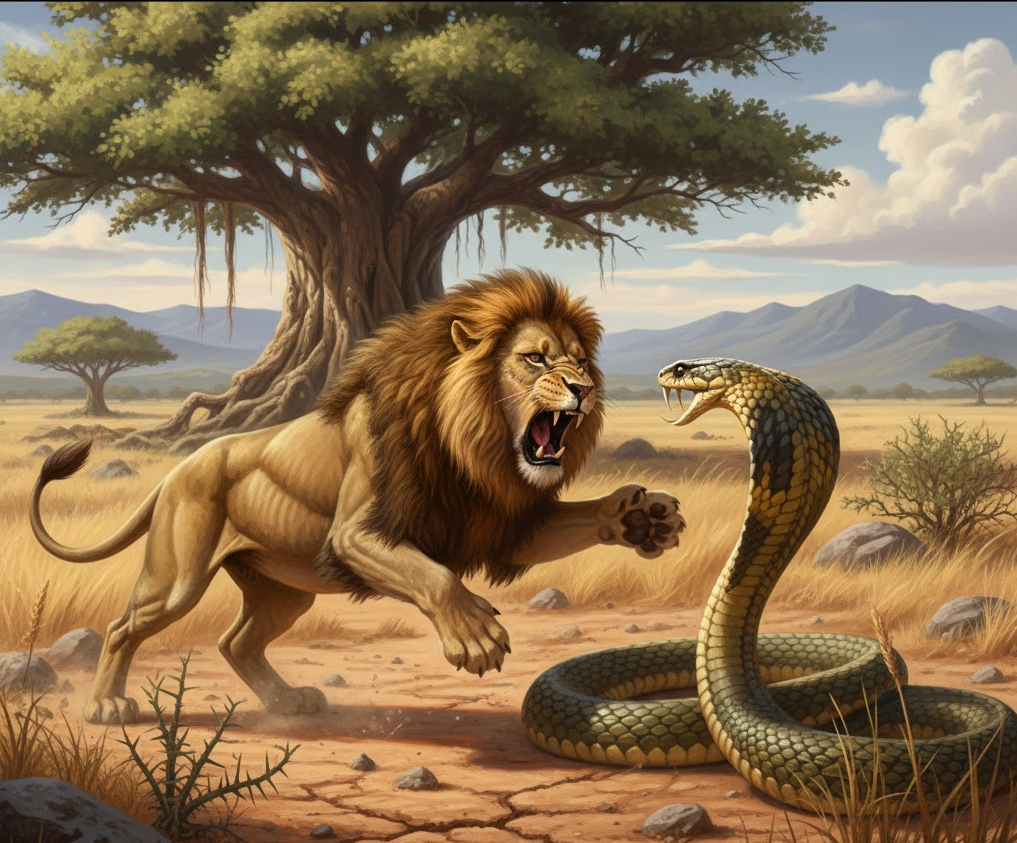
Contender 1: King Cobra
The king cobra stands as the longest venomous snake on Earth, reaching lengths of up to 18 feet. This massive reptile can weigh between 12 to 20 pounds despite its impressive length. Its slender, muscular body allows for quick strikes and smooth movement through various terrains.
The cobra’s venom delivery system ranks among nature’s deadliest weapons. Each bite injects up to 7 milliliters of neurotoxic venom through fangs that measure half an inch long. This powerful toxin attacks the nervous system, causing paralysis and respiratory failure within minutes of entering the bloodstream.
When threatened, the king cobra raises the front third of its body off the ground while spreading its iconic hood. This defensive posture makes the snake appear much larger and more intimidating to potential threats. The hood contains specialized ribs that extend outward, creating a flat, wide surface that displays warning patterns.
The snake’s scales provide excellent protection against minor injuries and help regulate body temperature. These overlapping plates create a flexible armor that bends with every movement. The cobra’s coloring, typically olive green or brown with pale yellow bands, offers effective camouflage in forest environments.
Fun fact: The king cobra is the only snake species that builds a nest for its eggs, and the female guards them fiercely until they hatch, refusing to eat during this entire period of up to 90 days.
Contender 2: Lion
The lion claims its title as the second-largest big cat, with males weighing between 330 to 550 pounds. These powerful predators stand about 4 feet tall at the shoulder and stretch up to 8 feet in length, not including their 3-foot tail. Male lions feature the distinctive mane that protects their neck during fights.
A lion’s bite force measures around 650 pounds per square inch, delivered through massive jaws equipped with sharp teeth. The four canine teeth can grow up to 3 inches long and pierce deep into prey. These teeth work alongside powerful jaw muscles that can crush bones and tear through thick hide.
Speed gives lions a significant advantage in most confrontations. They can sprint at speeds reaching 50 miles per hour in short bursts, though they typically hunt at slower paces. This explosive speed allows them to close distance rapidly and launch surprise attacks.
The lion’s claws serve as lethal weapons in combat. Each paw contains five retractable claws that measure up to 1.5 inches when extended. These sharp hooks can slash, grip, and hold prey firmly while the lion delivers a killing bite. The front paws pack tremendous force, capable of breaking bones with a single swipe.
Lions possess exceptional strength relative to their body weight. A single lion can drag prey weighing up to 1,000 pounds for considerable distances. This raw power translates directly to combat effectiveness, allowing lions to overpower animals much larger than themselves.
Their social nature has shaped their fighting instincts. Male lions regularly engage in brutal territorial battles with other males, gaining extensive combat experience. This experience makes them fearless fighters who understand how to inflict maximum damage quickly.
Fun fact: A lion’s roar can be heard from up to 5 miles away, and they use this powerful vocalization not just for communication but also to warn rivals and coordinate hunts with their pride members.
Head-to-Head
| Feature | King Cobra | Lion |
|---|---|---|
| Size | Up to 18 feet long | Up to 8 feet long (body) |
| Weight | 12-20 pounds | 330-550 pounds |
| Speed | 12 mph | 50 mph |
| Bite Force | N/A (venom-based) | 650 PSI |
| Key Strength | Deadly neurotoxic venom | Raw power and speed |
| Main Weakness | Vulnerable body, slow movement | No resistance to venom |
| Offense Tools | Venomous fangs, speed strikes | Claws, teeth, bite force |
| Defense Tools | Hood display, venom, agility | Thick mane, tough hide |
| Combat Strategy | Strike and retreat | Overwhelm with force |
King Cobra vs. Lion: The Showdown
The male lion spots movement in the tall grass ahead. A massive king cobra rises up, hood flared, swaying back and forth at eye level with the big cat. The snake hisses loudly, warning the lion to keep its distance.
The lion freezes momentarily, assessing this unusual threat. Most prey animals flee, but this creature stands its ground. Hunger drives the lion forward. It takes two cautious steps closer.
The cobra strikes with lightning speed. Its head shoots forward, covering six feet in a fraction of a second. Those deadly fangs aim straight for the lion’s face.
But the lion’s reflexes match its reputation. The big cat jerks its head sideways, and the cobra’s fangs miss by inches. Before the snake can retreat, the lion’s massive paw sweeps through the air like a sledgehammer.
The blow connects with the cobra’s body. The impact sends the snake tumbling across the ground. Scales tear. Internal damage occurs instantly from the crushing force.
The cobra recovers quickly and coils back into striking position. Blood seeps from the wound, but the snake remains dangerous. It launches another attack, this time aiming lower.
The fangs sink into the lion’s front leg. Venom pumps into the muscle tissue. The lion roars in pain and fury, shaking its leg violently and flinging the cobra several feet away.
This proves to be the cobra’s fatal mistake. That moment of contact gave the lion a perfect target. The big cat pounces with all its weight behind the attack.
Four hundred pounds of muscle and fury crashes down on the snake. The lion’s jaws clamp onto the cobra’s body just behind the head. Those three-inch canines pierce through scales and muscle, severing the spine.
The cobra thrashes wildly, its powerful body writhing and coiling around the lion’s legs. But the damage is done. Without its spine intact, the snake cannot strike again. The lion maintains its grip, shaking the cobra violently until all movement stops.
The venom begins working through the lion’s system. Its leg swells. Breathing becomes labored. The big cat limps away from the dead snake, favoring its injured leg.
Over the next few hours, the lion experiences severe pain and weakness. However, the bite location on the leg prevents the venom from reaching vital organs quickly. The lion’s massive body mass dilutes the toxin’s effectiveness. The big cat survives, though it remains weakened for several days.
The lion wins this battle 7 out of 10 times. Its superior size, speed, and combat abilities give it overwhelming advantages. The cobra’s venom poses a serious threat, but landing a fatal bite on such a fast, powerful opponent proves extremely difficult.
King Cobra vs. Lion: Who Would Win?
The lion would most likely win this fight due to its massive size advantage and devastating physical power. While the cobra’s venom could theoretically kill a lion, the snake’s slow speed and fragile body make it vulnerable to the cat’s explosive attacks.
Points to note:
- The cobra could win if it lands a bite on the lion’s face or neck, where venom reaches vital systems faster
- These animals would never naturally encounter each other since king cobras live in Asian forests while lions inhabit African grasslands
- A younger, smaller lion would face greater danger from the cobra’s venom than a full-grown male
- The lion’s thick mane provides some protection against bites to the neck area
- If the cobra strikes and successfully retreats multiple times, the accumulated venom could eventually overwhelm the lion
- Environmental factors like dense brush or rocky terrain could favor the cobra by limiting the lion’s mobility
- The time of day matters, as lions hunt more effectively during dawn and dusk when their vision gives them an advantage
- A female lion without a mane would be more vulnerable to neck bites but might be faster and more agile
- The cobra needs only one good bite to potentially win, but must survive long enough for the venom to work