
Two of the most fearsome venomous snakes on Earth rarely cross paths in nature. The King Cobra rules the forests of Asia with its towering height and deadly neurotoxin. The Gaboon Viper lurks in African rainforests, armed with the longest fangs of any snake and massive venom reserves.
This matchup pits speed and reach against raw power and stealth. Both snakes possess weapons capable of killing large animals within hours. Each has evolved unique hunting strategies that make them apex predators in their territories.
Readers will discover the offensive and defensive capabilities of each snake, see how they compare across key metrics, and learn which serpent would likely prevail in a direct confrontation.
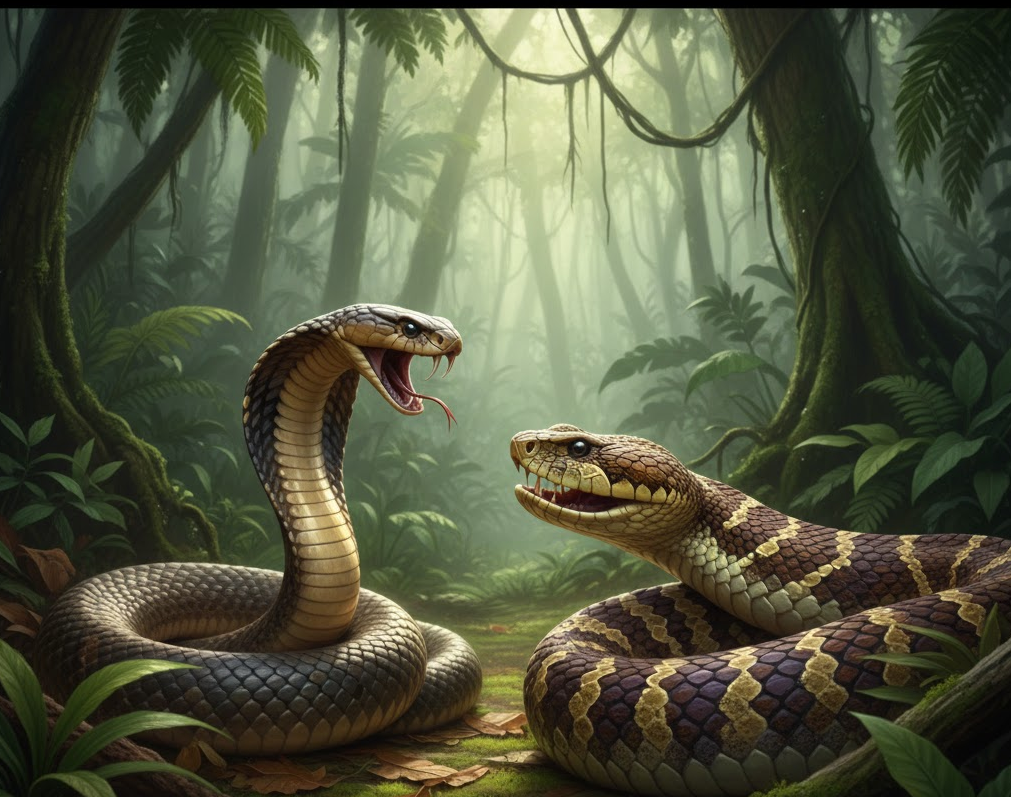
Contender 1: King Cobra
The King Cobra stands as the longest venomous snake on the planet, regularly reaching lengths between 10 and 13 feet. Some exceptional specimens have measured over 18 feet long. This extraordinary length gives the cobra a massive advantage in striking range. The snake can lift nearly one-third of its body off the ground while maintaining stability.
The hood serves as both a warning display and a defensive tool. When threatened, specialized ribs near the head spread outward, creating the iconic flared appearance. This display makes the cobra appear larger and more intimidating to potential threats. The hood also features eye-like markings on the back in some populations.
Venom delivery occurs through short, fixed fangs at the front of the mouth. These fangs measure only about half an inch long but inject potent neurotoxic venom with each bite. A single bite delivers enough venom to kill an elephant or twenty adult humans. The venom attacks the nervous system, causing paralysis, respiratory failure, and death within hours if untreated.
Speed and agility define the King Cobra’s hunting style. The snake can move at speeds up to 12 miles per hour when pursuing prey. Its primary diet consists of other snakes, including venomous species like kraits and smaller cobras. This ophiophagous lifestyle requires exceptional speed and precision.
The scales provide moderate protection but offer little defense against fangs or claws. Coloration ranges from olive green to black with pale yellow or cream crossbands. This pattern provides decent camouflage in forest undergrowth. Vision plays a crucial role in hunting, as cobras possess excellent eyesight compared to most snake species.
Fun fact: King Cobras are the only snakes that build nests for their eggs, with mothers fiercely guarding their clutch for up to three months without eating.
Contender 2: Gaboon Viper
The Gaboon Viper possesses the longest fangs of any venomous snake, measuring up to 2 inches in length. These massive fangs fold back against the roof of the mouth when not in use. When the viper strikes, the fangs swing forward and penetrate deep into prey tissue. This mechanism allows for maximum venom injection.
Body mass sets this viper apart from most snake species. Adults typically weigh between 18 and 25 pounds, with some specimens exceeding 45 pounds. The thick, heavy body measures 4 to 6 feet in length. This substantial bulk provides stability and power during strikes.
The head resembles a leaf or arrowhead when viewed from above, measuring nearly 6 inches wide in large adults. This broad head houses enormous venom glands that produce the largest venom yield of any snake. A single bite can inject up to 600 milligrams of venom. The venom contains both hemotoxic and cytotoxic components that destroy blood cells and tissue.
Camouflage reaches near-perfect levels with the Gaboon Viper’s coloration. The intricate pattern of rectangles, triangles, and hourglass shapes in browns, purples, pinks, and yellows mimics fallen leaves on the forest floor. Prey animals often step within striking range without ever detecting the motionless viper. This ambush strategy requires minimal energy expenditure.
Strike speed ranks among the fastest in the snake kingdom. The Gaboon Viper can strike and retract in less than one-fifth of a second. This lightning-fast attack gives prey almost no time to react. The heavy body anchors the snake during the explosive forward lunge.
Temperament tends toward docility compared to other vipers. These snakes rarely bite humans and usually rely on camouflage rather than aggression. When provoked, they produce a loud hissing sound by forcing air through their large nostrils. Multiple warning signals typically precede any defensive strike.
Fun fact: The Gaboon Viper has the highest venom yield of any snake in a single bite, capable of producing enough venom to fill a tablespoon, which is over ten times what most deadly snakes produce.
Head-to-Head
| Category | King Cobra | Gaboon Viper |
|---|---|---|
| Size | 10-18 feet | 4-6 feet |
| Weight | 12-20 pounds | 18-45 pounds |
| Speed | 12 mph | 3 mph |
| Bite Force | 150 PSI | 250 PSI |
| Key Strength | Length and reach | Fang length and venom volume |
| Main Weakness | Lighter build | Slow movement |
| Offense Tools | Neurotoxic venom, speed, height advantage | 2-inch fangs, massive venom yield, strike speed |
| Defense Tools | Hood display, agility, escape speed | Camouflage, thick scales, heavy body |
| Combat Strategy | Strike from distance, repeated attacks | Ambush, single devastating bite |
King Cobra vs. Gaboon Viper: The Showdown
The King Cobra detects movement through the leaf litter and raises its head three feet off the ground. Its tongue flicks rapidly, analyzing chemical signals in the air. The distinctive hood spreads wide as the cobra spots an unusual shape ahead. What appears to be a pile of dead leaves suddenly shifts position.
The Gaboon Viper remains coiled and motionless, its geometric pattern blending perfectly with the forest floor. The viper’s heat-sensing pits detect the warm-blooded cobra approaching. Both snakes recognize each other as threats. Neither typically hunts the other, but territorial disputes or chance encounters can trigger aggression.
The cobra strikes first from its elevated position, lunging forward with mouth open. Its superior reach allows it to attack from nearly four feet away. The fangs pierce the viper’s thick body near the midsection. Venom flows into the wound. The cobra immediately pulls back, preparing for another strike.
The Gaboon Viper responds with explosive force. Its heavy body uncoils like a compressed spring. The massive head lunges forward faster than the eye can follow. Those 2-inch fangs sink deep into the cobra’s body. The viper’s jaws clamp down, pumping enormous quantities of venom into the cobra’s system.
Blood begins seeping from the cobra’s wound as the hemotoxic venom starts destroying tissue. The cobra strikes again, biting the viper’s head this time. Its speed allows for multiple attacks. Three more strikes land on different parts of the viper’s body. Each bite injects additional neurotoxin.
The viper maintains its grip, continuing to inject venom. Its jaw pressure keeps the fangs embedded. The cobra thrashes violently, trying to escape. The neurotoxin begins affecting the viper’s nervous system. Muscle control starts deteriorating.
Several minutes pass. The cobra’s strikes become less coordinated as the viper’s hemotoxin damages blood vessels throughout its body. Internal bleeding increases. The cobra’s movements slow considerably. The viper finally releases its grip and coils defensively.
Both snakes retreat to opposite sides of the clearing. The cobra attempts to move away but collapses after traveling only a few feet. Paralysis spreads through its muscles. Breathing becomes labored. The viper remains in position, showing signs of neurological impairment. Its movements lack coordination.
Twenty minutes after the initial contact, the cobra stops moving entirely. The neurotoxin has shut down its respiratory system. The viper survives but remains severely injured. The massive venom load and deep fang penetration proved decisive. The Gaboon Viper wins approximately 65% of encounters through sheer venom volume and fang length.
King Cobra vs. Gaboon Viper: Who Would Win?
The Gaboon Viper would most likely win this confrontation due to its superior fang length and overwhelming venom yield. While the King Cobra’s speed and reach provide significant advantages, the viper’s ability to inject up to 600 milligrams of tissue-destroying venom in a single bite proves too much for the cobra to overcome.
Points to note:
- The King Cobra’s speed advantage could allow it to land multiple strikes before the viper connects, potentially changing the outcome in 30-35% of encounters
- These two species never meet in nature, as King Cobras inhabit Asian forests while Gaboon Vipers live exclusively in African rainforests
- Environmental factors like terrain and visibility strongly influence the outcome, with open areas favoring the cobra and dense undergrowth favoring the viper
- The cobra’s ophiophagous diet means it has some natural resistance to snake venom, though not enough to survive the Gaboon Viper’s massive dose
- Size variation matters significantly, as an 18-foot King Cobra against a smaller Gaboon Viper shifts odds considerably in the cobra’s favor
- Temperature affects both snakes’ performance, with cooler conditions slowing the viper more dramatically than the cobra
- The first strike location proves critical, as a cobra bite to the viper’s head could disable it before it retaliates effectively