
Two of the most dangerous snakes on Earth rarely cross paths in nature. The king cobra rules the forests of Asia while the inland taipan hunts in Australia’s remote deserts. Both possess venom powerful enough to kill hundreds of humans with a single bite.
This matchup pits size and aggression against pure toxic potency. One snake strikes with terrifying speed and holds on, the other delivers the deadliest venom known to science in lightning-fast attacks.
Readers will discover how these serpents compare in size, venom, fighting style, and natural weapons. The analysis breaks down each snake’s advantages and reveals which predator would likely emerge victorious from this deadly encounter.
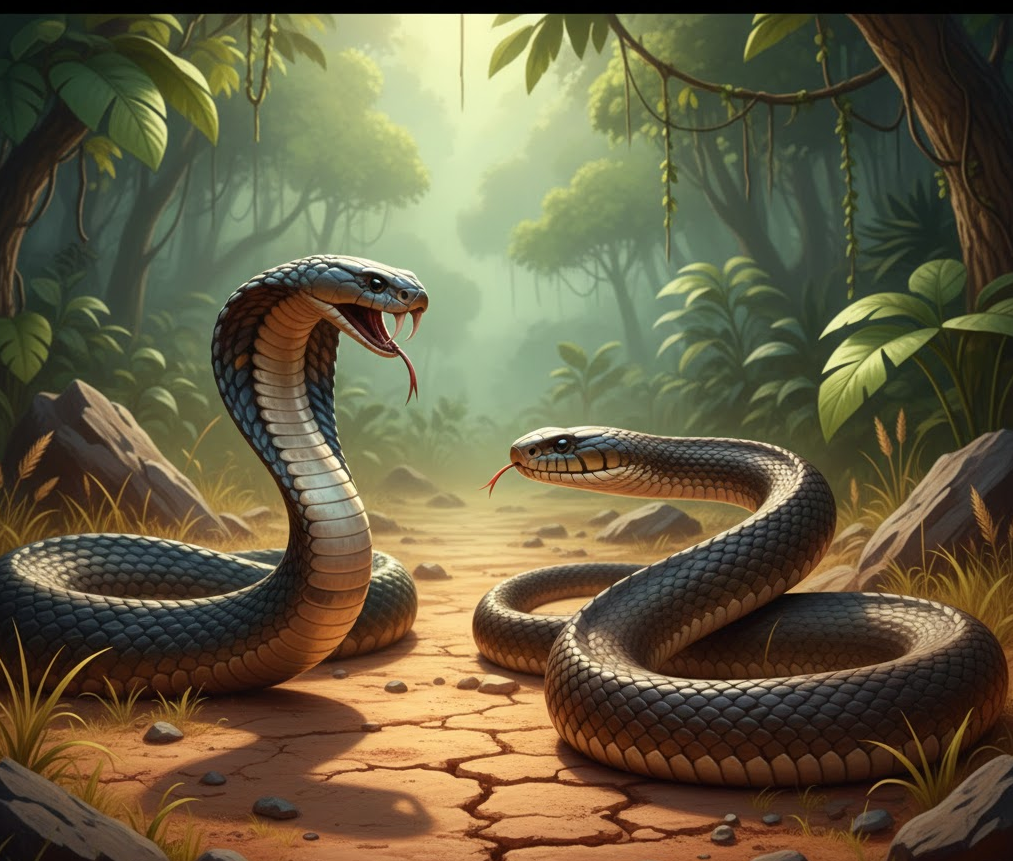
Contender 1: King Cobra
The king cobra stands as the longest venomous snake on the planet, reaching lengths up to 18 feet. Most adults measure between 10 to 13 feet, giving them a massive size advantage over nearly every other venomous snake. Their muscular bodies can weigh up to 20 pounds, providing significant striking power and grappling ability.
These snakes possess large, fixed fangs measuring up to half an inch long. The fangs inject potent neurotoxic venom that attacks the nervous system and causes respiratory failure. A single bite delivers enough venom to kill an elephant or 20 adult humans. The venom acts quickly, with symptoms appearing within minutes.
Beyond their venom, king cobras display remarkable physical intimidation. When threatened, they raise the front third of their body off the ground, spreading their iconic hood. This defensive posture can lift them 4 to 6 feet high, allowing them to meet a human at eye level. The hood expansion and loud hissing serve as powerful warnings before they strike.
Their muscular bodies give them excellent control and strength. King cobras can move with surprising speed across various terrain types. They climb trees with ease and swim competently through water. This physical versatility makes them formidable in multiple environments.
Fun fact: King cobras are the only snakes that build nests for their eggs, and females guard them aggressively. A mother king cobra will attack anything that comes near her nest, including elephants, making her one of the most dangerous animals during breeding season.
Contender 2: Inland Taipan
The inland taipan possesses the most toxic venom of any land snake measured by science. One bite contains enough venom to kill 100 adult humans or 250,000 mice. The venom works faster than almost any other snake’s, with death possible in as little as 45 minutes without treatment. This extreme potency evolved to quickly immobilize the taipan’s prey of small mammals.
This snake measures between 5.9 to 8.3 feet in length, making it considerably smaller than the king cobra. Adults typically weigh between 3.3 to 4.4 pounds. Despite the size disadvantage, the inland taipan compensates with incredible striking speed and accuracy. Each strike delivers multiple bites in a fraction of a second.
The inland taipan’s fangs measure about 0.12 to 0.24 inches, smaller than the king cobra’s but perfectly suited to its hunting style. The snake strikes with exceptional speed, biting repeatedly before the target can react. Studies show the inland taipan strikes faster than most snakes, landing up to eight bites in a single attack sequence. Each bite injects fresh venom.
Color adaptation gives this snake excellent camouflage in its desert environment. The scales change color seasonally, from dark brown in winter to lighter tan in summer. This helps regulate body temperature and provides concealment from both predators and prey. The smooth scales reduce friction, allowing quick movements across sand and rock.
The inland taipan’s temperament differs dramatically from the king cobra’s aggressive reputation. This snake actively avoids confrontation when possible, preferring to flee rather than fight. When cornered, however, it defends itself with explosive speed. The snake coils tightly and strikes multiple times in rapid succession.
Fun fact: The inland taipan has never caused a recorded human death despite having the world’s deadliest venom. This snake lives in such remote areas of central Australia that human encounters are extremely rare, and its shy nature means it avoids confrontation whenever possible.
Head-to-Head
| Attribute | King Cobra | Inland Taipan |
|---|---|---|
| Size | 10-18 feet | 5.9-8.3 feet |
| Weight | 12-20 pounds | 3.3-4.4 pounds |
| Speed | Fast strikes (15-20 mph) | Extremely fast strikes (20+ mph) |
| Bite Force | Moderate pressure, holds on | Light pressure, multiple rapid bites |
| Key Strength | Size, strength, venom volume | Most toxic venom, strike speed |
| Main Weakness | Less potent venom per volume | Smaller size, less physical power |
| Offense Tools | Long fangs, large venom payload, constriction ability | Lightning strikes, extreme venom toxicity, multiple bites |
| Defense Tools | Hood display, size intimidation, height advantage | Speed, agility, avoidance behavior |
| Combat Strategy | Aggressive engagement, sustained bite, physical dominance | Hit-and-run attacks, multiple envenomations |
King Cobra vs. Inland Taipan: The Showdown
The encounter begins when both snakes detect each other in neutral territory. The king cobra immediately rises up, spreading its hood wide and releasing a threatening hiss. Standing nearly five feet tall, it towers over the inland taipan. The smaller snake initially attempts to retreat, seeking an escape route.
Finding no exit, the inland taipan coils defensively. Its head remains low and alert, tracking the cobra’s movements. The king cobra advances slowly, maintaining its elevated posture. Confidence radiates from every movement as it closes the distance.
The inland taipan strikes first. Moving with blinding speed, it darts forward and lands three rapid bites on the king cobra’s lower body before retreating. The entire attack lasts less than two seconds. Venom floods into the cobra’s system, beginning its deadly work.
The king cobra lunges in response, but the taipan’s speed proves superior. It dodges the initial strike and counters with another lightning assault. Four more bites land on different parts of the cobra’s body. Each injection delivers microscopic amounts of the world’s deadliest venom.
Pain and confusion begin affecting the king cobra. The neurotoxic venom attacks its nervous system rapidly. Its movements become less coordinated. The massive snake attempts another strike, this time connecting with the inland taipan’s midsection. The cobra’s fangs sink deep and hold on.
The inland taipan thrashes violently in the cobra’s grip. It twists and bites repeatedly at the cobra’s face and neck. Six more strikes land before the taipan manages to pull free. Blood flows from wounds on both combatants.
Minutes pass with both snakes showing signs of envenomation. The king cobra’s symptoms prove more severe. Its respiratory system begins failing from the taipan’s incredibly potent neurotoxins. Breathing becomes labored and irregular. The cobra can no longer maintain its raised posture.
The inland taipan, though bleeding and poisoned, remains mobile. King cobra venom works more slowly than the taipan’s. The smaller snake circles cautiously, waiting. Its own symptoms include muscle tremors and difficulty moving smoothly.
The king cobra makes one final attempt to strike. The movement comes slowly and lacks precision. The inland taipan easily avoids it and delivers four more bites to the cobra’s head. These final injections seal the outcome.
Within twenty minutes of the first bite, the king cobra’s breathing stops. The inland taipan’s venom has overwhelmed the larger snake’s system. The taipan survives but requires hours to recover. Its smaller body processes the cobra’s venom more slowly, giving it time to endure.
The inland taipan wins this battle approximately 70 percent of the time. Its superior venom toxicity and striking speed overcome the king cobra’s size advantage.
King Cobra vs. Inland Taipan: Who Would Win?
The inland taipan would most likely win this confrontation. Its venom acts so quickly and powerfully that the king cobra cannot survive long enough to use its size advantage effectively.
Points to note:
- The king cobra’s best chance of victory involves landing its first bite and holding on, preventing the taipan from delivering multiple strikes
- Both snakes would likely die in nature after such an encounter, making this a pyrrhic victory at best
- These species would never meet naturally since they live on different continents with completely different habitats
- Environmental factors like temperature significantly affect snake performance, with both species requiring optimal warmth for peak speed
- A larger than average king cobra (over 15 feet) increases the cobra’s winning chances to roughly 40 percent
- The taipan’s reluctance to engage means the fight might not occur even if they did meet
- Previous meals, health status, and recent venom expenditure would dramatically influence the outcome
- Venom resistance varies among snake species, though neither has specific immunity to the other’s toxins